



![Synthesis, characterization and biological activity of the Cu (II)-1,3-PDTA [(Cu (II) (PDTA)] complex for the control of Erwinia chrysanthemi (soft rot) in the parsley manioc (Arracacia xanthorrhiza Bancroft)](/img/es/prev.gif)


 Inglés (pdf)
 Articulo en XML
 Referencias del artículo
 Traducción automática
 Enviar articulo por email
 Citado por SciELO
  Similares en
SciELO
Similares en
SciELO 
 Permalink

1. Introduction
The genus Pleurotus described by Paul Kumm in 1871, is widely distributed worldwide and its taxonomy is complex due to a high degree of morphological variability of the fruiting bodies, which is mainly attributed to various environmental factors (Velázquez-De Lucio et al., 2022). Pleurotus production is concentrated in Asia (China, Japan, South Korea, Taiwan, Thailand, Vietnam and India); China is the largest producer of this genus, and the most cultivated species are Pleurotus ostreatus and Pleurotus cornucopi, however, recently Pleurotus eryngii and Pleurotus nebrodensis have been successfully produced. In China, Pleurotus spp. production increased almost 200 % from 1997 to 2010 (Royse & Sanchez, 2017).
In the United States, Pleurotus spp. production increased substantially from 908 tons in 1998 to 3389 tons in 2013, with a marked increase in the number of growers in the country (97, 119, 122 for 2013, 2014 and 2015 respectively). In the case of Canada, Pleurotus production from 2013 to 2014 increased 26 %, with a focus on P. ostreatus and P. eryngii (Royse & Sanchez, 2017).
More than 20 species of Pleurotus are reported in Mexico, with P. ostreatus being the most studied and consumed species (Guzmán, 2000). Due to the diversity of species these mushrooms can present colors: yellow, cream, white, gray, brown and pink, possess fruiting bodies of rounded and convex shape that widens and almost always in the form of a shell, hence this species of mushroom is known as oyster mushroom and presents a stem that is attached to a cap (Viruthambigai et al., 2019; Rajarathnam et al., 1987), underneath are lamellae where the reproductive structures of the fungus called basidia are formed and are responsible for forming the spores (Muzaffar et al., 2023).
They are wood decomposers, growing on a great variety of forest and agricultural wastes, hardwoods, wood by-products, cereal straws, bagasse, etc. They constitute a variable group with well-defined characteristics: they are born from spores, lack chlorophyll, reproduce sexually or asexually and have a body formed by filaments called hyphae that together form a mycelium. They are widely distributed in the natural environment and for feeding they excrete enzymes on the substrate on which they grow; they are saprophytic and heterotrophic (Adline et al., 20215).
In Mexico, the fungus is known as "seta”, but it is also called "orejas blancas, orejas de palo, orejas de patancán, orejas de cazahuate and orejas de izote" (Gaitán-Hernández et al., 2002). It is characterized by growing naturally in temperate and tropical forests on trees, trunks, shrubs and other woody plants such as Agave salmiana (maguey plant) (Amit et al., 2020), the fungus that grows wild on this plant is known as maguey mushroom (Figure 1) (Morales-Flores et al., 2022). Maguey mushrooms are highly appreciated in rural areas of central Mexico, and they have been con sumed in various traditional dishes such as soups, “quesadillas” or “guisados” (González-Tijera et al., 2024).
The cultivation of mushrooms for human consumption is an activity that has increased significantly, not only for their nutritional value, but also for their nutraceutical, organoleptic and biotechnological properties (Velázquez-De Lucio et al., 2024). Global mushroom production in 2018-2019 was estimated at 43 million tons with Lentinula edodes (shiitake) contributing 26%, Auricularia spp 21%, Pleurotus ostreatus 16%, Agaricus bisporus (mushroom) 11%, considering the growth patterns of these major mushrooms, it is estimated that, globally, mushroom production may exceed 50 million tons by 2025 (Singh et al., 2021).
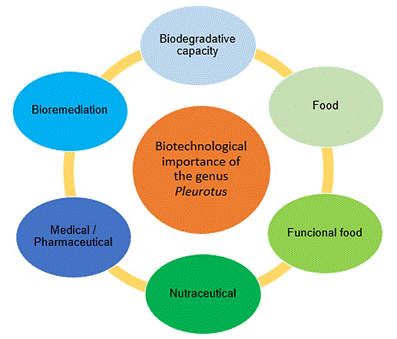
The most outstanding cases are those of Spain, Brazil and Mexico, although there are also efforts to cultivate it in other areas of the American continent. Spain is the largest producer of Pleurotus; in 2013 its production reached 14,893 tons, while Brazil produced 5,160 tons for the same year. In Mexico in 2014, production was 3,000 tons (1.6 times more than in 1998), with a view to increase not only for its nutritional qualities, but also nutraceutical and biotechnological, ease of cultivation, low investment cost, etc. Recently, research has broadened the search for alternative uses of the Pleurotus genus, so an increase in its cultivation is expected (Royse & Sánchez, 2017). Since 2015, there has been an increase in studies on the nutritional content and pharmacological effect as antioxidant, antimicrobial, anti-inflammatory, antitumor, immunomodulatory, among other effects, of both the fruiting bodies and the mycelium extracts of Pleurotus spp. which present a great renewable and easily accessible resource for the development of functional foods and nutraceutical (Figure 2) (Gomes et al., 2016).
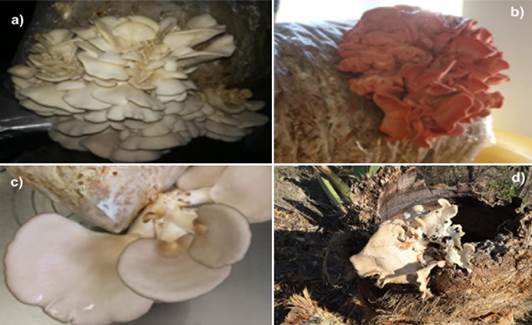
Figure 1 Mushroom cultivation P. ostreatus grown on cereal straw. a) mushroom white, b) mushroom pink, c) mushroom gray, and d) mushroom brown, grown on Agave salmiana (maguey pulquero).
The following is a review with the purpose of showing the importance of this genus and its applications in the environmental, food and medical areas, since it can be a functional alternative for our future.
The genus Pleurotus presents a high nutritional value, therapeutic properties and thanks to their bioactive compounds and the degradative capacity of their enzymes, they have a wide range of biotechnological applications that could be attractive in different industrial and service sectors (De Obeso and Scheckhuber, 2021; Grabarczyk et al., 2019) (Figure 3).
Some biotechnological applications of the genus Pleurotus are discussed below.
2. Bio-degradative capacity of Pleurotus spp
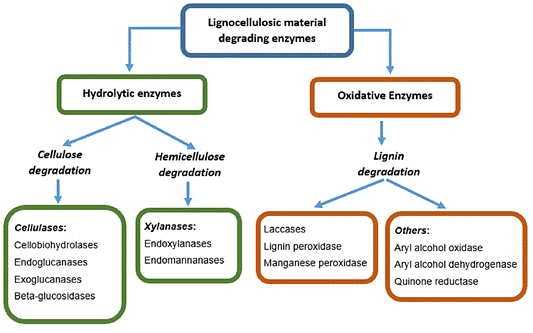
Mushrooms decompose plant debris, using it as a source of nutrients and thereby obtain new organic compounds, eliminating waste without deteriorating the environment. All this is possible thanks to the bio-degradative capacity of hydrolytic and oxidative enzymes that allow the fungus to degrade these molecules into low molecular weight compounds of easy absorption to perform their basic functions of growth and fruiting (Adline et al., 2021; Salmones, 2017), grow rapidly and successfully using various lignocellulosic residues, due to their ability to secrete degrading enzymes such as cellulases, hemicellulases, xylanases and oxidative enzymes such as lignin peroxidase (LiP), manganese peroxidase (MnP), laccases, among others (Figure 3) (El Enshasy et al., 2021; Ritota & Manzi, 2019), resulting in a white degradation of the lignocellulosic material, a phenomenon known as fungal white wood rot.
The biological degradation of lignocellulose into compounds of lower molecular weight and higher digestibility is necessary for the fungus to perform its basic functions of growth and fructification (Atiwesh et al., 2022). The ligninocellulolytic enzymes produced by the genus Pleurotus have a high potential for application in industries such as paper, chemical, textile, food, pharmaceutical, agricultural and recently for the production of bioenergy from agro-industrial wastes (Pilafidis et al., 2022; Salmones, 2017), therefore, the cultivation of Pleurotus spp can be considered as a prominent biotechnological process for the reduction and valorization of waste, which can be used to produce value-added products and thus contribute to the circular economy (Bermúdez-Savón et al., 2023; Zou et al., 2023).
3. Application of Pleurotus spp in bioremediation
Bioremediation is defined as a technology that pro motes the remediation of contaminated areas using microorganisms (Hu et al., 2021; Ferrera et al., 2007). Typically, bioremediation treatments are performed with bacteria, because they are easily cultivated, grow rapidly and can use organic contaminants as carbon and energy sources. However, in recent years, the use of white rot fungi, has shown great potential for the biodegradation of a wide spectrum of xenobiotics such as polycyclic aromatic hydrocarbons, synthetic and natural dyes, some pesticides such as pentachlorophenol, pharmaceuticals, industrial effluents, detergents, among others (Tabla 1) (Hadibarata et al., 2022; Maadani Mallak et al., 2020; Sekan et al., 2019; Singh et al., 2013), thanks to the fact that they possess powerful enzymatic systems and the formation of free radicals from veratryl alcohol, manganese and organic acids such as oxalic or malonic, which intervenes in the oxidation of these pollutants (Sekan et al., 2019).
The use of fungi of the genus Pleurotus in bioremediation or mycoremediation applications is considered a sustainable strategy in the recovery of environments contaminated by toxic substances, biodegradation of agricultural or agro-industrial waste (El-Ramady et al., 2022).
Tabla 1 Applications of Pleurotus mycoremediation in different areas
| Area | Biodegradable / bioabsorbed substance | Pleurotus species | Referencia |
| Dyes | Malachite green | P. pulmonarius | Leo et al., 2019 |
| Dyes | Congo red | P. cystidiosus | Kamakshi et al., 2024 |
| Pesticides | Chlorpyrifos and carbofuran | P. pulmonarius | Wali et al., 2020 |
| Pesticides | Endonsulfan | P. ostreatus | Sadiq et al., 2019 |
| Petroleum derivatives | Diesel fuel | P. florida | Roshandel et al., 2021 |
| Petroleum derivatives | Crude oil and motor oil | P. pulmonarius | Adenipekun & Fasidi, 2023 |
| Wastewater | Degradation of dyes: brilliant blue R, methyl red, malachite green, bioabsorption of heavy metals: lead, chromium, nickel | P. ostreatus | Bhatnagar et al., 2021 |
| Wastewater | Bioabsorption of copper, iron, manganese and zinc | P. pulmonarius | Muliyadi et al., 2022 |
| Drugs | Sulfamethoxazole | P. ostreatus | Sá et al., 2024 |
| Drugs | Diclofenaco, naproxeno y ketoprofeno | P. djamor | Cruz-Ornelas et al., 2019 |
| Aromatic compounds | Diclofenac, naproxen and ketoprofen | P. ostreatus | Kumar et al., 2022 |
| Aromatic compounds | Polychlorinated biphenyls | P. ostreatus | Šrédlová et al., 2020 |
| Aromatic compounds | Benzopyrene | P. eryngii | Hadibarata et al., 2020 |
| Tumor promoter | Phorbol esters | P. pulmonarius | Gomes et al., 2022 |
The genus Pleurotus can also develop on substrates added with crude oil (Mohammadi-Sichani et al., 2019). P. djamor, P. ostreatus (Ferrera et al., 2007), P. pulmonarius (Njoku et al., 2016) and P. florida (Roshandel et al., 2021) managed to grow in culture media and soils contaminated with different concentrations of oil and its derivatives, the results obtained are quite important from a biotechnological point of view, since they can be channeled for the bioremediation of lands and waters contaminated by hydrocarbons from oil.
Another proposed use for bioremediation is in waters contaminated by the dye industry, in a study it was observed that oxidative enzymes (laccase and MnP) from P. djamor, degraded 90.39% of trypan blue dye (Direct Blue 14) (Singh et al., 2013). These oxidative enzymes, now coming from P. florida, P. eryngii and P. sajor-caju, are also capable of degrading bright green dye, a polluting dye in industrial effluents (Naraian et al., 2018). On the other hand, the laccase enzymes, MnP and catechol oxidase of P. eryngii were responsible for the degradation of the reactive blue dye 21 in aqueous solution, used in the textile industry (Abd et al., 2019). Also, the use of P. ostreatus has been proven to decrease contamination with triclosan, a chemical compound with a slight phenol odor that causes serious diseases when ingested. P. ostreatus has the ability to biodegrade large amounts of triclosan in aqueous environments. These studies open ideas for future research on the ability of fungi to remove contaminants from wastewater and activated sludge (Maadani Mallak et al., 2020).
Most of the bioremediation studies conducted have been at the laboratory level, scaling up the process to industrial levels faces methodological challenges, both in substrate handling and fungal biomass production (Salmones, 2017).
4. Pleurotus spp in the Food Industry
The fruiting body of mushrooms is attractive for the remarkable nutritional properties they represent. Fresh mushrooms have their own peculiar taste, the flavor of mushrooms are also of high culinary value, promote the formation of gastric juice and intestinal activity, which makes it a delicious food (Chun et al., 2020).
Pleurotus species are considered as a complete, healthy and suitable food for people, since they are rich in protein, which contain the nine essential amino acids required by humans (Effiong et al., 2024; Majesty et al., 2019) (Table 2), these are of higher nutritional value than plant proteins and milk, but lower compared to meat, they also contain carbohydrates, crude fiber, are low in fat, ash and high water content, they are also rich sources of minerals (Na, P, Fe and K) and vitamins (thiamine, riboflavin, ascorbic acid, ergosterin and niacin) (El-Ramady, 2022; Galappaththi et al., 2021; Raman et al., 2021). The nutritional composition is af fected by various factors, the most im portant are environmental factors and the composition of the substrate, in which the mycelium can colonize with its maximum rate of extension, capable of fructifying in the shortest possible time and producing fruiting bodies of the best quality and nutritional content. As part of the substrate preparation, it is possible to add some compounds and supplements to enrich the formulation and obtain better yields (Muswati et al. 2021; Elattar et al., 2019).
After harvesting, mushrooms have a very short half-life of 1 to 3 days at room temperature (15 - 22 °C), as they are prone to changes in texture and color, loss of nutrients and flavor; their high degree of moisture content favors the risk of microbial contamination, altering the physicochemical constituents of the fruiting body and, therefore, require proper processing and preservation (Huo et al., 2023, Raman et al., 2021).
Table 2 Proximal composition (%) of some Pleurotus species
| Mushroom | H | P | C | L | A | F | Reference |
| P. ostreatus | 90.7 | 18.3 | 71.3 | 2.6 | 7.8 | 14.3 | Jacinto-Azevedo et al., 2021 |
| P. eryngii | 88.0 | 18.8 | 57.0 | 2.3 | 5.5 | 10.0 | Sardar et al., 2022 |
| P. citrinopileatus | 88.9 | 30.0 | 42.5 | 3.9 | 7.7 | 20.8 | Singh & Singh, 2011 |
| P. citrinopileatus | - | 37.6 | 36.3 | 2.2 | 7.9 | 7.0 | Dimopoulou et al., 2022 |
| P. flabellatus | 91.0 | 21.6 | 57.4 | 1.8 | 10.7 | 11.9 | Mshandete & Cuff, 2009 |
| P. flabellatus | 90.0 | 27.6 | 37.5 | 3.7 | 7.2 | 24.4 | Ahmed et al., 2016 |
| P. djamor | 79.5 | 35.5 | 44.8 | 1.7 | 5.9 | 14.6 | Jegadeesh et al., 2018 |
| P. pulmonarius | 78.8 | 20.3 | 34.0 | 2.6 | 7.3 | 9.0 | Silva et al., 2002 |
| P. pulmonarius | - | 11.3 | 75.6 | 2.0 | 3.1 | 8.0 | Oyetayo et al., 2021 |
| P. florida | 87.5 | 20.5 | 42.8 | 2.3 | 9.0 | 11.5 | Ahmed et al., 2008 |
| P. florida | 90.0 | 22.7 | 39.1 | 4.1 | 8.3 | 25.8 | Ahmed et al., 2016 |
| P. sajor-caju | 87.0 | 24.6 | 39.8 | 2.3 | 8.3 | 210.9 | Alam et al., 2007 |
| P. sajor-caju | 90.0 | 25.5 | 38.0 | 4.0 | 7.23 | 25.2 | Ahmed et al., 2016 |
| P. tuber-regium | 87.1 | 22.1 | 63.0 | 1.1 | 3.0 | 10.9 | Ijeh et al., 2009 |
| P. tuber-regium | 91.4 | 10.5 | 60.1 | 2.8 | 20.2 | 5.71 | Magamana et al., 2023 |
| P. eous | 86.8 | 24.1 | 45.6 | 4.7 | 9.8 | 15.9 | Kortei & Wiafe-Kwagyan, 2015 |
H: humidity, P: protein, C: carbohydrates, L: lípids, A: ash, F: fiber.
Mushrooms should be consumed fresh or undergo freezing, dehydration or brining processes to preserve their quality for human consumption, and should not be stored in humid, hot and dirty environments (Abou et al., 2023; Diamantopoulou & Philippoussis, 2015).
Currently, there are several methods for preserving mushrooms and extending their shelf life. There are processing methods that give mushrooms a short-term shelf life (weeks to months), for example: refrigeration (0 - 5 °C), vacuum packing, chemical treatment, blanching, radiation; and long-term (up to one year), for example: freezing (below -20 °C), canning and drying or dehydrating (Rai & Arumuganathan, 2008).
5. Pleurotus ssp as a functional food and nutraceutical
Mushrooms present an added value in food, since in addition to being a nutritious food, they can be considered as a functional food (Teniou et al., 2022).
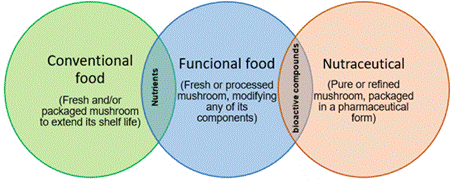
The difference between “conventional” and “functional” foods lies in the effect they exert on the human body, while conventional foods fulfill their traditional function of providing nutrients that help the body's ordinary functions, functional foods are foods, whether in natural or processed form, that in addition to their nutritional components, contain additional components that favor the preservation or care of a person's health, physical capacity and mental state (Teniou et al., 2022; Espinosa-Páez et al., 2021).
Functional foods can be natural, or those to which some component has been added or increased in content or eliminated, or those to which the nature or bioavailability of some of their components has been modified, or any of the above combinations (Gupta & Pragya, 2021; Silveira et al., 2003).
There is confusion in differentiating between functional food and a nutraceutical, since their definitions are similar. A nutraceutical is any substance that may be present in food that provides health benefits, including disease prevention and treatment, beyond basic nutrition (Bonciu, 2020; Valencia del Toro & Garín, 2017).
A nutraceutical compound can be defined as a dietary supplement, presented in a pharmaceutical formulation (pills, capsules, tablet, powder, etc.), of a concentrated bioactive natural substance, present in food and which, taken in doses higher than those existing in those foods, presumably, has a favorable effect on health, greater than that which the normal food could have (Sneha et al., 2022; Rojas et al., 2015).
Comparing this second definition of a nutraceutical and that of functional food, it can be said that the nutraceutical product is a functional food (or part thereof) but presented in a pharmaceutical form (Figure 4) for human consumption as a nutritional supplement, obtaining a positive effect on health, while the functional food is presented and consumed as food itself and that a beneficial effect on health is also obtained (Daliu et al., 2019).
Mushroom nutraceutical products are defined as pure or partially refined or unrefined products from fruiting bodies, mycelium or filtered culture medium after mycelial growth in culture. Mushrooms of the genus Pleurotus and their bioproducts, such as extracts and powders derived from mycelium or fruiting bodies, could be consumed as functional food or as nutraceutical supplements (Figure 4) by both healthy subjects and those afflicted with any ailment or ailment for their medicinal properties (Kumar, 2020; Carrasco-González et al., 2017).
6. Medicinal properties of fungi of the genus Pleurotus
Mushrooms of the genus Pleurotus are not only appreciated for their organoleptic and nutritional properties, but also for their medicinal properties (Juárez-Hernández et al., 2023).
Medicinal properties are mainly attributed to primary and secondary metabolites (bioactive compounds) present in the fruiting bodies of the fungus (Sen et al., 2021), in the mycelium (Illuri et al., 2022) and in the culture medium derived from mycelial growth (Ogidi et al., 2020; Salmones, 2017).
Among the main medicinal activities of secondary metabolites are the following: antibacterial, antiviral, antifungal, antitumor, anti-inflammatory, antiallergic and immunomodulatory activity (Torres-Martínez et al., 2022, Beltrán-Delgado et al., 2020).
The bioactive compounds of the genus Pleurotus are varied, among which are polysaccharides, protein-polysaccharide complexes, fatty acids, steroids, terpenes, saponins, vitamins, phenolic compounds, alkaloids, peptides, enzymes (lectins, cellulases, xylanases, laccases, invertases), minerals, as well as other molecules (Beltrán-Delgado et al., 2020; Cuzcano-Ruiz et al., 2020; Ogidi et al., 2020).
Some examples of the pharmacological activity of bioactive compounds extracted from different Pleurotus species are listed in Table 3.
According to the table above, it is observed that the therapeutic activity of the bioactive compounds of Pleurotus spp. is wide (Martínez-Flores et al., 2021), it is important to identify and characterize these compounds for their use in pharmacological and clinical treatments, on the other hand, the identification of the synergistic effect of these substances in the human organism would give the possibility of taking full advantage of their therapeutic potential, so this could be used to obtain bioproducts with great application in the medical-pharmaceutical industry. Therefore, fungi of the Pleurotus genus are a valuable resource for the well-being of human beings (Galappaththi et al., 2021; Sen et al., 2021).
Table 3 Therapeutic activity of bioactive compounds of the genus Pleurotus
| Bioactive compounds | Activity | Pleurotus species | Reference |
| Polysaccharide (β-glucan) | Antitumor | P. tuber-regium | Zhang et al., 2004 |
| Polysaccharide (β-glucan) | Antinociceptive | P. pulmonarius | Smiderle et al., 2008 |
| Polysaccharide (β-glucan) | Antinociceptive | P. pulmonarius | Baggio et al., 2012 |
| Polysaccharide (α y β-glucan) | Immunomodulator | P. albidus | Castro-Alves., 2017 |
| Polysaccharide (β-glucan) | Antitumor | P. eryngii | Al-Saffar et al., 2020 |
| Polysaccharide (Pleuran) | Antioxidant | P. ostreatus | Bobek & Galbavy, 2001 |
| Polysaccharide | Immunomodulator | P. nebrodensis | Cui et al., 2015 |
| Polysaccharide | Immunomodulator | P abieticola | Pan et al., 2022 |
| Polysaccharide-protein | Anticancer, Antioxidant | P. ostreatus | Mitra et al., 2013 |
| Polysaccharide-protein | Antitumor | P. tuber-regium | Abdullah et al., 2024 |
| Polysaccharide-peptide | Hypoglycemic | P. abalonus | Chen et al., 2015 |
| Polysaccharide-peptide | Antioxidant | P. abalonus | Li et al., 2007 |
| Polisacárido-péptido | Hepatoprotector | P. ostreatus | Abdel-Monem et al., 2020 |
| Peptides | Antihypertensive | P. cornucopiae | Jang et al., 2011 |
| Péptidos | Antitumoral | P. eryngii | Sun et al., 2017 |
| Lectin | Antiviral | P. citrinopileatus | Li et al., 2008 |
| Lectin | Antiviral | P. citrinopileatus | Hassan et al., 2015 |
| Lectin | Antibacterial | P. flabellatus | Murugesan & Gunasagaran, 2021 |
| Lectin | Atitumor | P. ostreatus | Kamel et al., 2021 |
| Terpenes | Anti-inflammatory, Antitumor | P. cornucopiae | Wang et al., 2013 |
| Linoleic acid | Anti-nematode | P. ostreatus | Satou et al., 2008 |
| Fatty acids | Antibacterial | P. eous | Suseem & Saral, 2013 |
| Fatty acids | Anti-nematode | P. djamor | Pineda-Alegrí et al., 2017 |
| Fatty acids | Hypoglycemic | P. florida | Madaan et al., 2022 |
| Ergosterol | Antihypercholesterolemic | P. ostreatus | Dissanayake et al., 2009 |
| Ergosterol | Antifungal | P. cystidiosus | Menikpurage et al., 2009 |
| Ergosterol | Antiamoebic | P. ostreatus | Meza-Menchaca et al., 2015 |
| Ergosterol | Antitumor | P. ostreatus | Meza-Menchaca et al., 2020 |
| Phenolic compounds | Antioxidant | P. citrinopileatus | Lee et al., 2007 |
| Phenolic acids, flavonoids | Antioxidant, Anti-inflammatory | P. eryngii | Lin et al., 2014 |
| Phenolic compounds | Anti-inflammatory | P. pulmonarius | Nguyen et al., 2016 |
| Flavonoids | Antioxidant | P. ostreatus | Beltrán-Delgado et al., 2021 |
| Flavonoids, phenols | Antioxidant, Antimicrobial | P. ostreatus, P. djamor | Martínez-Flores et al., 2021 |
| Phenolic compounds | Anti-inflammatory | P. pulmonarius | Amirullah et al., 2021 |
| Ribonuclease enzyme | Antiproliferative | P. djamor | Wu et al., 2010 |
| Lovastatin | Antihypercholesterolemic | P. ostreatus | Alam et al., 2011 |
| Lovastatin | Antihypercholesterolemic | P. ostreatus | Ramakrishnan et al., 2017 |
7. Current and future challenges
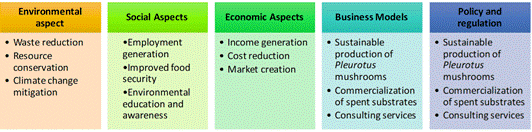
The genus Pleurotus, being a cosmopolitan fungus with nutritional properties, has gained importance in recent decades for use in various fields. As we have seen in previous chapters, its value can be exploited in areas such as food, medicine, industry, agriculture, and the environment. But to achieve its full valorization, it is necessary to carry out research to know the bioactive properties with antioxidant, anti-inflammatory and antimicrobial action of the genus Pleurotus and its potential to be used as an ingredient in the production of functional foods, for example: dietary supplements, capsules or powders, enrichment of beverages or food. As well as in the production of drugs to treat chronic diseases, such as cancer, diabetes and cardiovascular diseases. Conduct clinical studies to demonstrate the efficacy and safety of Pleurotus as a nutraceutical. To achieve the above, it is necessary to develop technologies that increase its cultivation and large-scale production. To allow its processing and transformation into high value-added products. And to exploit the biochemical properties of the enzymes produced by the fungus to apply them in the production of biofuels, bioplastics and other chemical products. Another under-researched property is its possible activity as an antagonist of pests and diseases of agricultural interest, so it represents an opportunity to investigate its potential to be used as a biological control agent and for this purpose. It is necessary to review protocols on its mode of action and the types of metabolites that may be involved. Although the Pleurotus genus represents an opportunity for different areas of the industry, it is necessary to develop strategies for the promotion and commercialization of products derived from these fungi. Generate regulations and standards that allow the production and commercialization of the different products. In addition, to ensure that the production of food and medicines is of high quality and safe. Manage for companies to invest in research and development, as well as to improve the productivity and quality of products derived from the Pleurotus genus. Finally, it is necessary to look at Pleurotus mushroom cultivation as an opportunity to generate a sustainable process and incorporate the process into a circular economy, as environmental, social and economic benefits can be generated. This can be achieved thanks to the use of agro-industrial substrates as a support for mushroom growth, and subsequently the spent substrate can be used as compost or organic fertilizer. Reduction of the amount of waste that ends up in landfills and causes environmental problems by reducing the amount of methane produced. Figure 5 shows the aspects to be considered to generate a circular economy model in the cultivation of Pleurotus mushrooms.
8. Conclusions
The cultivation of Pleurotus mushrooms offers a unique opportunity to generate a sustainable and circular process, with environmental, social and economic benefits. The most important aspects to consider for future research and development are: The use of agro-industrial substrates and the reuse of spent substrate as compost or organic fertilizer. Achieving waste reduction and minimization of methane production with its cultivation. Generate more sustainable and environmentally friendly production models. To bet on research and development of new applications and products derived from Pleurotus fungi. As well as establishing mechanisms to promote the circular economy and sustainability in the production of food and medicines from these fungi. In the future, Pleurotus mushroom cultivation is likely to become a leading industry in the production of sustainable food and medicine, and to play an important role in reducing the environmental footprint of agriculture and the food industry.

